You’ve been doing everything right. You publish content. You drop affiliate links. You spend money on traffic that lands on your page, scrolls for four seconds, and disappears forever.
And yet the commissions don’t come.
If you typed something like “why my affiliate links get clicked but no sales” or “done for you website for affiliate marketers” into Google and ended up here, you already know the issue isn’t your effort. It’s the structure of what you’re sending people to. Static pages with affiliate links worked in 2018. In 2026, the buyer arrives skeptical, scroll-fatigued, and unwilling to trust a stranger’s recommendation on the first visit.
The fix isn’t more content. It isn’t a better hook. It’s giving cold visitors something to do the moment they land — something that holds their attention, reveals their intent, and earns the right to put an offer in front of them.
By the end of this post, you’ll know exactly why the challenge-based platform model is replacing traditional affiliate funnels, how it works mechanically, and what it takes to launch one without months of setup.
Why Most Affiliate Sites Stop Working After A Few Weeks
Most people fighting for affiliate revenue have already tried the standard playbook. Niche blog with affiliate links. A YouTube channel with affiliate descriptions. A Facebook group funneling traffic to a squeeze page. Maybe a basic WordPress site with banner ads and a few review posts.
Each of these has the same structural flaw: the visitor has no reason to engage. They read, scroll, and leave. There’s no participation. No reason to come back tomorrow. No way for you to learn what they actually care about.
You can’t fix this by writing better blog posts or buying more traffic. The container is the problem. A blog with affiliate links is a one-way broadcast. A squeeze page is a single binary decision. A Facebook group lives on someone else’s platform.
What’s missing is a destination where the visitor participates — picks something, takes action, tracks progress, and reveals their buying intent through behavior instead of words. That’s what turns a website from a billboard into an asset.
What Is A Done For You Challenge Website?
A done for you challenge website is a complete WordPress platform that’s pre-built to host interactive challenges — short, structured action plans visitors can join, complete in steps, track progress on, and share. Instead of a static blog, you get a destination that asks visitors to participate, which dramatically increases time on site, return visits, and offer engagement.
Here’s the mechanism that makes it work:
When someone joins a challenge — say, a 7-day social media growth challenge or a 14-day weight loss reset — they’re telling you exactly what they want. They’ve raised their hand. Their goals, problems, and buying intent are now visible through their participation. That changes everything about how you monetize them.
Instead of begging cold visitors to click an affiliate link they didn’t ask about, you place relevant recommendations inside the challenge experience. The visitor working through a “build your email list” challenge sees the email tool you recommend. The person doing a productivity challenge sees the planner you sell. Promotion stops feeling like pitching and starts feeling like helping.
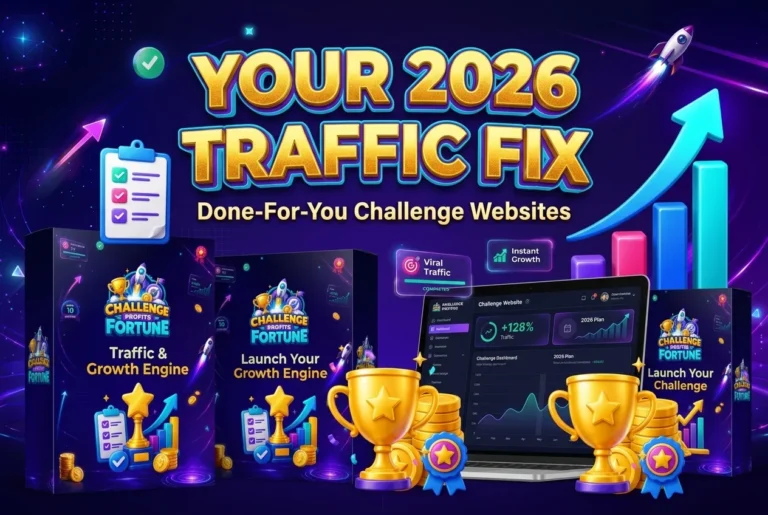
This is the model behind Challenge Profits Fortune — a pre-built WordPress platform with 100 ready-made challenges, member accounts, progress tracking, built-in sharing, a digital product shop, and a banner promotion system already configured. It removes the technical wall that stops most people from launching this kind of site themselves.
According to research from Nielsen Norman Group, engagement metrics like time on site and repeat visits correlate far more strongly with conversion than raw traffic volume — which is exactly what a challenge platform is built to produce.
How To Launch A Challenge Platform Without Building It From Scratch
You have two paths. The slow path is to hire a developer ($3,000–$8,000), commission custom challenge logic, write 100 challenges from scratch, design the site, build progress tracking, set up payment processing, and test everything. Realistically, this is a three-to-six month project before you have anything live.
The fast path is to install a pre-built platform and skip directly to promotion. Here’s what that looks like in practice:
Step 1 — Install. A WordPress backup file restores the entire platform in minutes. Domain, hosting, install, done. No coding, no plugin wrestling, no design work.
Step 2 — Connect monetization. Drop your affiliate links into the built-in banner system. Add your digital products to the pre-configured shop. Connect PayPal or Stripe via WooCommerce.
Step 3 — Drive traffic. Use the included social posts and promo video to start sharing. Every visitor who joins a challenge is now a tracked, engaged lead instead of an anonymous bounce.
The done for you approach isn’t the only way to build this kind of platform — you can absolutely code it yourself if you have months to spare. But for anyone trying to launch this quarter rather than next year, a system like Challenge Profits Fortune is the shortcut that gets you to traffic, engagement, and revenue without rebuilding the wheel.
What Realistic Results Look Like
Let’s be specific about what to expect, because skeptical traffic deserves real numbers.
A typical static affiliate blog converts somewhere between 0.5% and 2% of cold visitors into any meaningful action. A challenge-based platform structurally lifts those numbers because visitors are participating, not just reading. Time on site moves from 30–60 seconds to 4–8 minutes. Return visit rates climb because people come back to continue their progress. Email opt-in rates increase because joining a challenge requires registration.
On the monetization side, the shift is qualitative. Instead of one-shot affiliate clicks where you hope someone buys today, you’re building an engaged audience you can promote to repeatedly across challenge content, member dashboards, completion pages, and the digital product shop.
Realistic timelines: you can launch a platform in a single weekend. You can have your first 50 challenge participants within 30 days if you’re actively promoting. Meaningful monetization typically starts around the 60–90 day mark as your participant base grows. None of this is “passive income overnight” — but it’s a real business asset with structural advantages over a basic affiliate blog.
For a deeper look at why engagement metrics drive long-term affiliate revenue, Backlinko’s research on user behavior and search performance is a good reference point.
Frequently Asked Questions
What is the difference between a done for you challenge website and a regular affiliate blog?
A regular affiliate blog is a content destination — visitors read and leave. A challenge website is a participation destination — visitors join, take action, track progress, and return. The participation produces engagement signals, repeat visits, and the structural ability to promote offers inside an experience rather than next to one.
Do I need technical skills to launch a done for you challenge website?
No. Platforms like Challenge Profits Fortune install via WordPress backup file, which restores the entire site in minutes. If you can buy a domain and follow a step-by-step tutorial, you can launch one. The challenges, design, payment system, and member experience are already built.
How fast can I start monetizing a challenge website?
The platform itself can be live within hours of purchase. Connecting your affiliate links and digital products takes another hour or two. Actual revenue depends on how quickly you drive traffic — most people see their first engagement within 30 days of active promotion and meaningful affiliate or product revenue within 60–90 days.
The Single Insight That Matters
If you take one thing from this post: the bottleneck in affiliate marketing isn’t traffic or content quality — it’s the structure of the destination you send people to. Static pages don’t engage. Engaged participants convert.
A challenge platform changes the relationship between visitor and offer because the visitor is already taking action when they encounter your recommendations. That structural shift is why this model is quietly beating tired affiliate funnels in 2026.
If you want to see exactly what a pre-built version of this platform looks like — the 100 ready-made challenges, the banner promotion system, the member dashboard, and the digital product shop already configured — the full walkthrough is here. Worth a look before you spend another month building from scratch.